
Back in 2016, I wrote that valuing the Education and Care workforce is essential to delivering quality outcomes for children. Two years later, ECW asked educators a simple question: do you feel our profession is respected and valued? 133 educators answered, and nine in ten said no. Half couldn’t see a future for themselves in Education and Care, or were already looking elsewhere. And 98.5% agreed we need to stand together if we want change.
A pandemic, a workforce crisis and a national reckoning on child safety later, it’s time to ask again. In 2027, ECW will run a new educator survey. In the meantime, here’s where things stand.
What’s changed, and what hasn’t
Some things have moved. The worker retention payment has been extended to June 2028, and our sector is finally being talked about as education, not just care. But Victoria University’s Mitchell Institute found this year that early childhood educators earn a median of about $34.30 an hour, against $42.40 across all occupations and $62 for school teachers. More than half of the jobs in our sector in 2022–23 lasted less than a year, more than double the attrition rate in schools. That’s the opposite of what children need: stable, consistent relationships.
Behind those numbers are real people. Over my long career, I’ve had the honour of working with highly skilled, passionate Education and Care professionals. I’ve also walked alongside many educators struggling under the weight of our system, in services with a revolving door. One service had six directors in a single year. In another, the Kindy children were on their third teacher, and it was only Term 3. These educators and teachers were giving their all to meet the competing demands of the role and still be present for the children. But for many, it’s an impossible juggle.
Even the Mitchell Institute’s report, which makes a strong case for our workforce, counts the turnover in “childcare jobs”. As I wrote in my open letter to Ministers, the words used about us matter. Educators make hundreds of pedagogical decisions every day. When we describe that work as minding children, we make it easier to underpay and overlook. This is not babysitting. It’s brain-building.
Safeguarding begins with people
Child safety is not negotiable. Every child deserves to be safe, and ECW supports every measure that genuinely protects them. But as I said in my open letter, children are safeguarded not by documents, but by people.
That’s why I welcome the latest reforms. On 2 November 2026, Education Ministers agreed to strengthen supervision, making it clear that adequate supervision is about more than ratios. ACECQA describes adequate supervision as active, intentional, responsive and engaged. My colleague Dr Saurubh Malviya, founder of We Belong Education, takes it a step further. He calls it interactive supervision: supervision that isn’t only about watching children, but about being with them. Responsive, engaged, interactive: that’s relational work. You can’t attune to a child from across the room, or from behind a screen.
And educators have stepped up. Everyone in our services now completes mandatory national child safety training, and a national worker register shows regulators who is working where. Having asked so much of them, we should trust them to do what children need most: to nurture.
A new pressure: being watched
CCTV is now in roughly a quarter to a third of services, and governments are encouraging more. Canberra has announced an $11.5 million grants program for not-for-profit services to install or upgrade CCTV. Meanwhile in New South Wales, preschool funding has been a rollercoaster. After strong pushback from the sector, community and mobile preschools have been given a reprieve, keeping their 2026 funding for the next two years. Common sense prevailed there. But the program payments that support preschool in early learning services, where around two-thirds of NSW children do their preschool year, still stop in December. Cameras are being funded while teaching is being cut. I find that hard to reconcile.
The national assessment by Nous Group, released in September, found CCTV can be a useful tool. It also found there isn’t enough evidence for a universal mandate, and that cameras cannot replace the active supervision of trained educators. One finding stayed with me: 82% of educators said CCTV helps protect staff from false allegations. Many educators now carry a quiet fear that a moment of care could be misread.
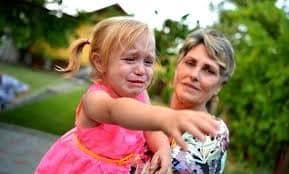
Picture this. A toddler trips in the yard and comes running, arms up, sobbing. Not long ago, an educator would have scooped them up without a second thought. Now there’s a pause. A glance at the camera. A pat on the back and a “you’re okay” from a careful distance. The child is safe. But are they comforted?
“An educator who is afraid to hold a child isn’t a safer educator. They’re a more anxious one, and the child feels it.”
The Harvard Center on the Developing Child calls it serve and return. When a child reaches out and an adult responds with eye contact, words or a hug, that back-and-forth builds the architecture of the brain. When it’s persistently missing, the body’s stress response switches on instead.
There’s something else worth knowing. State and territory surveillance laws mean cameras can’t record where children are most vulnerable: nappy change areas, bathrooms and, in most services, sleep rooms. The national assessment noted that these limits on where cameras can go reduce what CCTV can do to prevent abuse. In those spaces, the safeguard has always been people. Victoria’s Rapid Child Safety Review heard repeatedly that the most effective safety measure is the “four eyes” principle: two adults in view of each other when they’re with children. It protects children, and it protects staff, who can work as a team. In other words, a well-staffed, trusted team does what a camera never can.
What would help
- Clear guidance on nurturing touch, so educators know that comforting a distressed child or offering a cuddle isn’t just allowed, it’s expected, with sensible safeguards like visibility and teamwork.
- Honest conversations about CCTV: why it’s there, how footage is used, and that it’s there to protect good practice, not police it.
- Investment in the conditions underneath: fair pay, and ratios, group sizes and groupings that make connection possible. I’ve seen educators wear noise-cancelling headphones just to get through the day, in rooms too big, too crowded and too loud for anyone’s nervous system. Money spent on people protects children in every room, including the ones cameras can’t see.
- The language of a profession: educators, early learning services, Education and Care.
Time to ask again
So, do educators feel respected and valued today? I suspect many of you would still say no. But the passion that kept so many of our 2018 respondents in this profession is still here, every day, in every service.
Has CCTV, or the fear of being misread, changed the way you care for children? Take our five-minute survey below (it’s anonymous), email us at admin@aecwpb.com, or contribute your story. Your answers will shape our bigger educator survey in 2027. For a deeper look at what being watched does to educators’ nervous systems and to children’s relationships, watch for Dr Geraldine Harris’s guest post, When Education and Care Is Watched, coming soon.
Have your say
Sources
- ECW (2016), Valuing the Education and Care workforce is essential to delivering quality outcomes for children
- ECW (2018), Do you feel Educators are respected and valued?
- Lee Gane (2025), An open letter to Ministers responsible for early childhood education and child safety
- Mitchell Institute, Victoria University (2026), Australia’s childcare system is full of churn
- Australian Government Department of Education (2026), New national reforms to strengthen supervision
- ACECQA, Adequate supervision for children’s safety
- Nous Group for Education Ministers (2026), Nationwide Assessment of CCTV in ECEC Settings: Executive Report
- Victorian Government (2025), Rapid Child Safety Review, Chapter 6
- Center on the Developing Child, Harvard University, Serve and return
- Minister for Education and Minister for Early Childhood Education (2026), Next steps to strengthen early education
- NSW Department of Education (2026), Funding changes for early learning services in 2027
- KU Children’s Services (2026), New analysis reveals NSW preschoolers worst funded in the country
- The Sector (2026), Educators breathe sigh of relief as NSW Government backs down on community preschool funding cuts